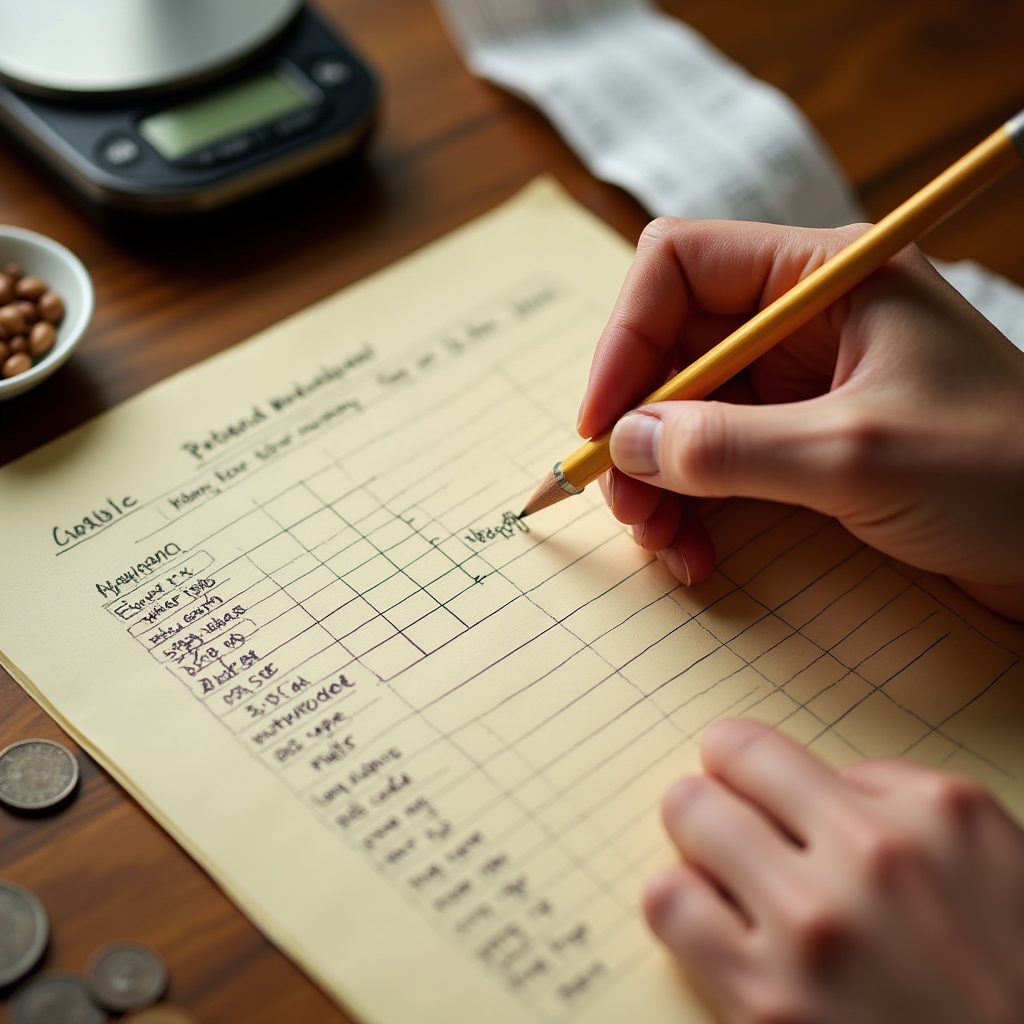
The Monvarolario business workshop is a focused, three-session program for food business owners who want to understand what each dish actually costs to produce — and set prices that reflect that reality.
Each session is a working meeting, not a lecture. You bring your dishes — we provide the tools, the framework, and the guidance.
The most important thing you take from the workshop is not a workbook — it's the understanding of how to do this yourself. You build each tool during the sessions, using your own dishes and your own numbers.
Sessions are kept to a small group format so that each participant receives individual attention during the costing exercises. This is a working session, not a classroom lecture.
Three sessions, each covering a distinct stage of the costing and pricing process. Sessions are scheduled to accommodate the working hours of food business owners.
Business workshops are held at our Xalapa venue: Plaza Caxa, Av. 20 de Noviembre 571, Local 3C, Xalapa, Veracruz. Community format available in other areas.
Your main dish recipes, recent ingredient purchase receipts, and your current menu prices. We provide the scale, the cost worksheets, and the methodology.
Ingredient cost is the starting point. These are the items that almost always go uncounted — until the workshop.
Whether you use gas tanks or other fuel, the cost is real and it varies by dish based on cooking time and heat intensity. The workshop shows you how to allocate it accurately.
Styrofoam containers, plastic bags, paper plates, toothpicks — each one has a cost. Counted across hundreds of servings per week, they add up to a meaningful expense.
The salsa you give away, the limes on the table, the cilantro and onion on the side — these are ingredients with a cost. When given away without pricing, they reduce your margin.
Prep time, cooking time, cleaning time — your labor has a value. The workshop includes a simple method for assigning a labor cost to each dish based on realistic time estimates.
Not all of what you buy becomes product. Vegetable trim, meat waste, and overcooked items represent real cost. Accurate costing accounts for your actual yield, not the theoretical weight.
Cleaning, cooking, and prep all use water and sometimes electricity. While smaller than gas costs, these are real operating expenses that belong in a complete cost structure.
Contact us to find out about upcoming workshop dates and how to reserve your place in a business session.
Contact Us